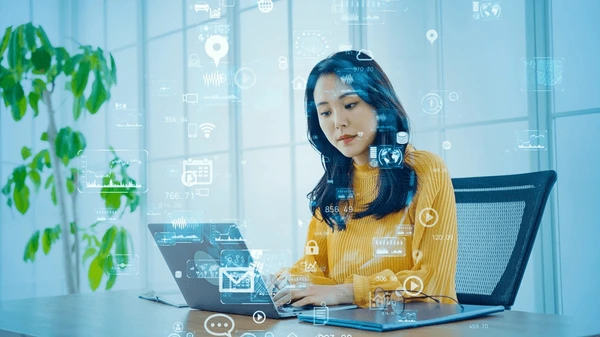
In a rapidly digitalising world, where virtual and physical realities are converging, two groundbreaking technologies—Digital Twins and Artificial Intelligence (AI)—are joining forces to revolutionise how individuals interact with digital spaces. Digital twins, once limited to industrial simulations, are now evolving into deeply personalised digital representations of individuals powered by intelligent algorithms. This transformation is enabling hyper-personalised virtual identities that can mimic real-world behaviour, preferences, and decisions. For professionals and students exploring this domain, enrolling in an artificial intelligence course becomes a strategic step toward understanding and building the future of human-digital symbiosis.
What Are Digital Twins in the Human Context?
Conceptualised initially for industrial systems, a digital twin is a virtual replica of a physical entity. In healthcare, this could be a digital replica of a patient’s organs; in aviation, it could be a digital representation of a turbine. When applied to individuals, digital twins become virtual models that simulate aspects of a person’s behaviour, personality, biometrics, and preferences in real time.
Unlike static avatars, personalised digital twins are dynamic—they learn, adapt, and evolve based on continuous data streams. Powered by AI, these twins can help manage everything from health routines to career planning, social interactions, and even emotional well-being.
AI: The Brain Behind Personalised Virtual Identities
AI acts as the brain that brings digital twins to life. Machine learning algorithms process the vast datasets generated by an individual—health metrics from wearables, social media behaviour, purchasing patterns, language preferences, and even tone of voice. These data inputs are then used to model behaviour and generate virtual identities that closely resemble the real person in decision-making and personality traits.
Deep learning models in Natural Language Processing (NLP), sentiment analysis, and facial recognition allow these digital twins to converse, emote, and interact with users in remarkably human ways. As a result, digital twins are not only passive mirrors of their human counterparts—they can become proactive partners in daily decision-making.
For those who aspire to work in these cutting-edge domains, an artificial intelligence course provides foundational knowledge on AI’s algorithms, tools, and ethics, enabling future innovators to build responsible and intelligent virtual entities.
Key Applications: The Rise of the Digital You
1. Personalised Healthcare Assistants
Imagine a virtual self that monitors your sleep, predicts illness, recommends diet adjustments, and even schedules doctor appointments—all autonomously. This isn’t sci-fi anymore. AI-powered digital twins can now simulate organ functions or monitor real-time health data, leading to predictive diagnostics and truly customised care.
2. Digital Identity Management
In the age of multiple online personas—LinkedIn for professionalism, Instagram for lifestyle, and gaming avatars for entertainment—digital twins can unify and manage these identities. AI ensures that behaviour, tone, and interactions are consistently optimised across platforms, giving users better control over their virtual presence.
3. Virtual Companions and Mental Health
Mental health chatbots, such as Woebot, already utilise AI to engage users in cognitive behavioural therapy. Now, digital twins can further enhance this by providing long-term support that understands the individual’s emotional history and evolves with them. The twin becomes not just a tool but a lifelong companion.
4. Education and Career Coaching
A digital twin of a student can predict the most effective learning paths, simulate various career trajectories, and provide personalised study suggestions. In corporations, digital employee twins can optimise job training, predict burnout, and improve team dynamics by modelling behaviour patterns and preferences.
5. Entertainment and the Metaverse
In gaming and immersive environments, such as the metaverse, digital twins provide hyper-realistic experiences. AI ensures that virtual avatars reflect players’ decisions, expressions, and even speaking styles. These real-time, AI-enhanced representations blur the line between reality and simulation.
Ethical Considerations and Challenges
As with any technology involving personal data and behavioural modelling, ethical challenges abound. Digital twins powered by AI raise concerns about:
- Privacy: With so much personal data being processed, data breaches can become deeply invasive.
- Consent: Users must retain complete control over what their digital twin knows and does.
- Autonomy: When a virtual self starts making decisions, where does control lie?
- Bias and Representation: AI models are only as good as their data. If poorly trained, digital twins may reinforce harmful biases or misrepresent personalities.
These issues underscore the need for ethical design, transparent AI systems, and continuous monitoring—core subjects explored in any advanced AI course in Bangalore that prepares learners for real-world AI deployment.
The Role of AI in Evolving Digital Twins
AI not only powers the behaviour of digital twins but also ensures their growth over time. Here’s how:
- Learning Algorithms: Twins adapt through reinforcement learning and supervised models, evolving with each interaction.
- Predictive Analysis: They forecast needs, preferences, and problems before they arise.
- Emotional Intelligence: Through affective computing, digital twins recognise and respond to emotional states, making interactions feel more natural.
- Security Layers: AI enables real-time anomaly detection, swiftly flagging impersonations or system failures.
The convergence of AI and digital twins heralds a new paradigm in personalisation. As technology matures, the distinction between physical self and virtual identity will continue to blur—paving the way for digital humans who think, feel, and act with remarkable realism.
Looking Ahead: The Digital Twin Society
From remote learning and telehealth to smart cities and personalised media, the impact of digital twins enhanced by AI is far-reaching. As more individuals adopt smart devices and consent to data-sharing, their virtual selves will become richer, more responsive, and increasingly independent.
This transformation demands skilled professionals who understand not just the technology but also its ethical, psychological, and social dimensions. Enrolling in an AI course in Bangalore, a city rapidly becoming an AI innovation hub, can empower the next generation of developers, designers, and ethicists to build digital twins that are not only intelligent but also humane.
In conclusion, the fusion of digital twins and AI represents the dawn of personalised virtual identities that reflect, enhance, and extend human lives into the digital realm. The future belongs to those who can navigate this blend of reality and simulation with skill, empathy, and a sense of responsibility.
For more details visit us:
Name: ExcelR – Data Science, Generative AI, Artificial Intelligence Course in Bangalore
Address: Unit No. T-2 4th Floor, Raja Ikon Sy, No.89/1 Munnekolala, Village, Marathahalli – Sarjapur Outer Ring Rd, above Yes Bank, Marathahalli, Bengaluru, Karnataka 560037
Phone: 087929 28623
Email: enquiry@excelr.com