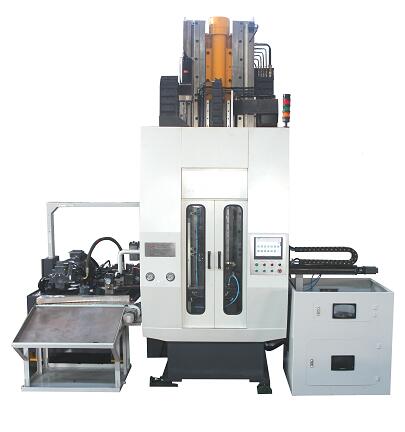
Broaching machines have long been recognised as quiet workhorses in precision manufacturing. While they may not attract the same attention as newer digital technologies, their contribution to dependable, high-accuracy production is undeniable. Whether shaping internal keyways, crafting complex splines, or producing repeated profiles at scale, broaching remains one of the most effective methods for achieving consistent dimensional accuracy. Below is an in-depth look at the top benefits that make broaching machines indispensable in modern manufacturing.
Exceptional Accuracy and Repeatability
One of the defining strengths of broaching machines is their ability to achieve highly precise and repeatable cuts. Because the broach tool itself contains progressively larger teeth, the material is removed in a controlled, predictable sequence. This design limits deflection, reduces error, and ensures every part in a production batch matches the next. Manufacturers whose work demands tight tolerances—such as aerospace, automotive, medical devices, and defence—often rely on broaching for its unwavering consistency.
High Production Efficiency With Minimal Cycle Times
Broaching is renowned for its speed. A single pass of the broach tool can complete a complex shape that might otherwise require multiple machining steps. This capability significantly reduces cycle times and optimises workflow on the shop floor. In industries where production speed directly impacts profitability, broaching machines offer a strategic advantage by turning out finished components at remarkable rates without sacrificing accuracy.
Versatility Across Materials and Applications
Another key benefit is the versatility of broaching machines. They can handle a wide range of materials, including steel, aluminium, brass, titanium, and various alloys. Whether the requirement is for internal or external profiles, flat surfaces, circular forms, or highly specialised geometries, broaching can adapt to the task. This adaptability makes broaching an ideal solution for manufacturers who need a single process capable of producing diverse part profiles across multiple product lines.
Reduced Need for Skilled Labour Intervention
While many machining processes demand constant operator involvement, broaching machines are comparatively straightforward to run once set up. The cutting is automated within the single-stroke pass, allowing operators to focus on quality control rather than complex toolpath adjustments. This reduces dependency on highly specialised labour, which is increasingly valuable as industries face shortages of skilled machinists.
Superior Surface Finishes With Minimal Post-Processing
Broaching is celebrated for the quality of its surface finish. The stepwise cutting action of the broach teeth results in a smooth, consistent surface that often eliminates the need for secondary finishing operations. This reduction in additional processing saves both time and cost, while also improving the integrity of the final part by minimizing handling.
Reliability and Long Tool Life
Broach tools are engineered from durable, wear-resistant materials designed to withstand heavy-duty use. When maintained properly, these tools offer exceptional longevity, especially in high-volume production environments. Their robustness allows manufacturers to schedule production with confidence, knowing the tooling will maintain accuracy across long runs without frequent replacement.
Cost-Effective for High-Volume Production
Although the initial investment in broaching tools can be relatively high, the overall cost-efficiency becomes clear in large-scale operations. Because a single broach can produce thousands of identical parts with minimal wear, the cost per unit declines dramatically. Companies focused on mass production often find broaching to be one of the most economical options available for shaping consistent internal and external features.
Improved Structural Integrity of Components
Broaching creates clean, uninterrupted cuts that enhance the structural reliability of the components being manufactured. Unlike processes that may generate micro-tears or irregular edges, broaching preserves material integrity, making it especially suitable for critical parts where reliability cannot be compromised. This is particularly important in industries like aviation and automotive safety systems, where every dimension matters.
Enhanced Safety and Operator Comfort
Because broaching machines operate in a controlled, predictable manner, they contribute to a safer working environment. There is minimal risk of tool breakage during cutting, and the machines themselves are built to minimise vibration and noise. This not only improves operator comfort but also fosters better focus and fewer production errors.
Consistency Across Complex Geometries
Finally, broaching stands out in its ability to maintain accuracy even for intricate shapes. Whether producing irregular forms or detailed internal profiles, broaching machinery excels at delivering crisp, uniform geometries that might challenge other machining methods. This reliability gives manufacturers confidence when committing to complex designs, knowing that the broaching process will support their ambitions with consistent quality.
Broaching machines remain a cornerstone of high-accuracy manufacturing for good reason. Their ability to blend precision, speed, efficiency, and versatility continues to make them a top choice for manufacturers who need both quality and productivity. As industries evolve and demand even greater accuracy, the role of broaching is not diminishing—it is becoming more essential than ever.